
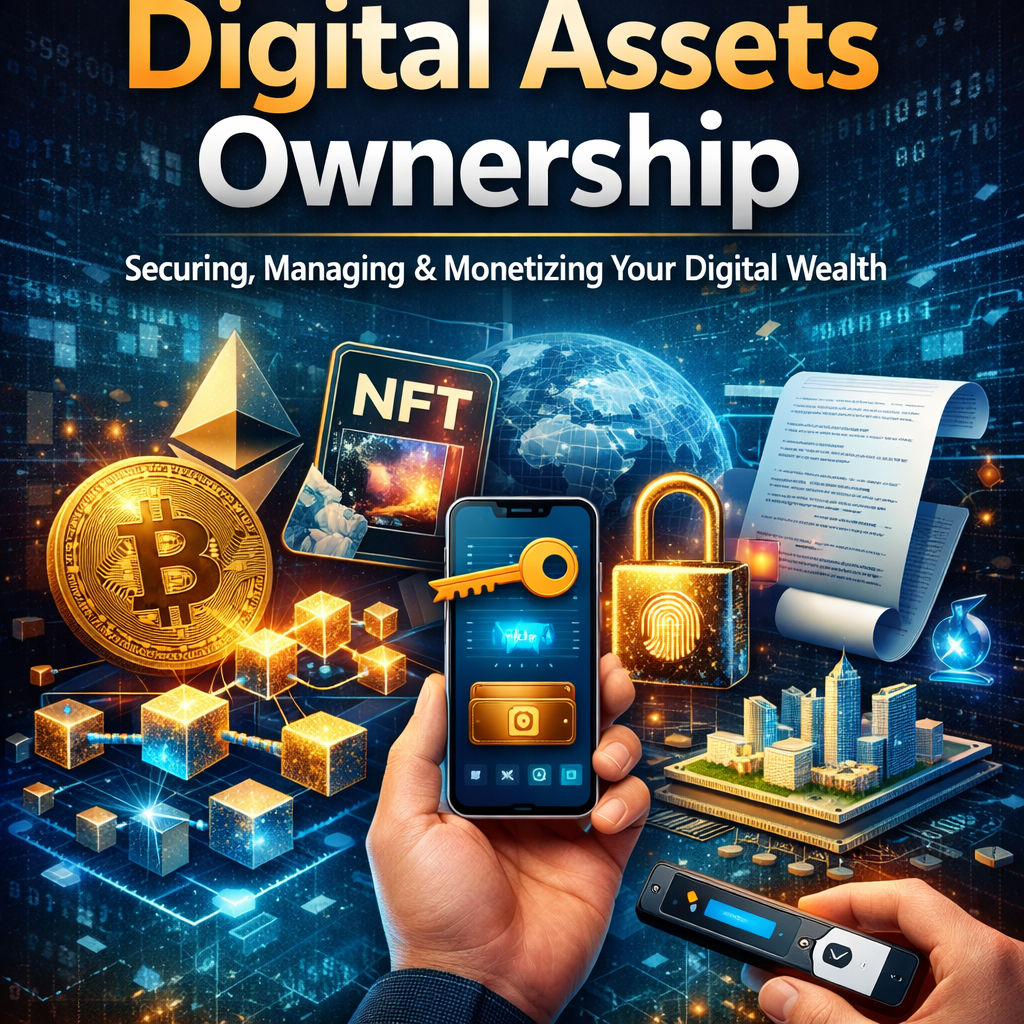
In today’s rapidly evolving digital economy, Digital Assets has become one of the most important concepts shaping how individuals, businesses, and institutions create, protect, and transfer value online. From cryptocurrencies and NFTs to digital intellectual property and tokenized real-world assets, ownership in the digital world is redefining traditional financial and legal systems.
As more assets move online, understanding Digital Assets is no longer optional—it is essential. This guide explores what digital assets ownership truly means, how it works, why it matters, and how you can protect and maximize your digital assets in a http://traficjet.com/secure and future-ready way.
What Is Assets Ownership?
Digital Ownership refers to the legal and technical control over assets that exist in digital form. These assets can include:
- Cryptocurrencies (Bitcoin, Ethereum, stablecoins)
- Non-Fungible Tokens (NFTs)
- Digital art and media files
- Tokenized stocks and real estate
- Domain names and virtual land
- Digital intellectual property (IP)
Unlike traditional ownership, digital ownership relies heavily on blockchain technology, cryptographic keys, and decentralized networks rather than physical possession or centralized institutions.
True Digital Assetsmeans you control the asset directly—without intermediaries—using private keys that prove authenticity and authority.
Why Digital Assets Is Important
The importance of Digital Assets Ownership lies in control, transparency, and financial freedom. Traditional assets are often governed by third parties such as banks, governments, or corporations. Digital assets shift power back to the individual.
Key benefits include:
- Full control without intermediaries
- Global accessibility 24/7
- Transparency through blockchain records
- Security via cryptographic verification
- Borderless transfer of value
As digital economies grow, individuals who understand and leverage digital assets ownership gain a significant advantage.
How Digital Assets Ownership Works
At the core of Digital Assets Ownership is blockchain technology. A blockchain is a decentralized ledger that records ownership and transaction history in a secure and immutable way.
Ownership is established through:
- Private keys: Proof of ownership
- Public addresses: Asset identification
- Smart contracts: Automated ownership rules
- Wallets: Storage and access tools
If you control the private key, you control the asset. This is why wallet security is critical in digital assets ownership.
Types of Digital Assets You Can Own
1. Cryptocurrencies
Cryptocurrencies represent the most common form of digital assets ownership. Owners can store, trade, stake, or use crypto for payments without relying on banks.
2. NFTs (Non-Fungible Tokens)
NFTs prove ownership of unique digital items such as art, music, collectibles, and virtual land. Digital assets ownership in NFTs ensures authenticity and scarcity.
3. Tokenized Real-World Assets
Real estate, commodities, and stocks can be tokenized on blockchain networks, enabling fractional ownership and increased liquidity.
4. Digital Intellectual Property
Creators can own and monetize digital IP through blockchain-based licensing, protecting their work from unauthorized use.
Legal Aspects of Digital Assets Ownership
Legal frameworks for Digital Assets Ownership are still evolving. Some countries recognize digital assets as property, while others classify them as securities or commodities.
Key legal considerations include:
- Ownership rights recognition
- Tax obligations
- Inheritance and estate planning
- Regulatory compliance
Understanding local and international laws is crucial for protecting your digital assets ownership long-term.
Security Challenges in Digital Assets Ownership
While digital ownership offers freedom, it also brings responsibility. Losing private keys means losing access forever.
Common risks include:
- Phishing attacks
- Malware and hacking
- Fake NFT marketplaces
- Centralized exchange failures
Best security practices:
- Use hardware wallets
- Enable multi-factor authentication
- Store private keys offline
- Avoid suspicious links and platforms
Strong security is the foundation of safe Digital Assets Ownership.
Digital Assets Ownership vs Traditional Ownership
| Feature | Traditional Assets | Digital Assets Ownership |
|---|---|---|
| Control | Third-party dependent | User-controlled |
| Accessibility | Limited hours | 24/7 global |
| Transparency | Low | High |
| Transfer Speed | Slow | Instant |
| Cost | High fees | Lower fees |
This comparison highlights why digital assets ownership is becoming increasingly popular worldwide.
Role of Smart Contracts in Digital Assets Ownership
Smart contracts automate ownership rules without human intervention. They execute transactions automatically when predefined conditions are met.
Benefits include:
- Trustless transactions
- Reduced fraud
- Faster settlements
- Automated royalty payments
Smart contracts are a core pillar of modern Digital Assets Ownership systems
Future of Digital Assets Ownership
The future of Digital Assets Ownership is closely linked with:
- Web3 development
- Metaverse expansion
- Decentralized finance (DeFi)
- AI-powered asset management
- Digital identity systems
As adoption increases, digital assets ownership will likely become a standard part of global economic infrastructure.
How to Start with Digital Assets Ownership
If you’re new, follow these steps:
- Learn blockchain basics
- Choose a secure digital wallet
- Buy assets from trusted platforms
- Protect your private keys
- Diversify your digital portfolio
Starting small and learning consistently is the best approach to successful digital assets ownership.
Common Mistakes to Avoid
- Keeping assets on exchanges long-term
- Ignoring wallet backups
- Falling for hype-based projects
- Neglecting legal and tax rules
Avoiding these mistakes strengthens your control over digital assets ownership.
Conclusion
Digital Assets Ownership is reshaping how value is created, stored, and transferred in the modern world. It offers unmatched control, transparency, and financial independence—but only to those who understand its mechanics and risks.
As digital transformation accelerates, mastering digital assets ownership is not just an opportunity—it is a necessity. Whether you are an investor, creator, or entrepreneur, owning your digital future starts with knowledge, security, and strategic action.
Frequently Asked Questions (FAQ) – Digital Assets Ownership
1. What does digital assets ownership mean?
Digital assets ownership refers to having full control and authority over assets that exist in digital form, such as cryptocurrencies, NFTs, and tokenized assets. Ownership is usually verified through blockchain technology and cryptographic keys rather than physical documents or centralized institutions.
External Resource:
https://www.investopedia.com/digital-assets-ownership-5219761
2. How is ownership of digital assets verified?
Ownership is verified using blockchain records and private keys. When a transaction is recorded on the blockchain, it creates an immutable proof that shows who owns the asset at a specific time.
Learn more:
https://www.ibm.com/topics/blockchain
3. Are digital assets legally recognized as property?
In many countries, digital assets are legally recognized, but classification varies. Some jurisdictions treat them as property, while others define them as commodities or securities. Laws are evolving as adoption increases.
Legal overview:
https://www.weforum.org/agenda/2023/03/digital-assets-regulation-explained/
4. What types of digital assets can be owned?
Common digital assets include cryptocurrencies, NFTs, virtual land, domain names, digital art, and tokenized real-world assets like real estate or stocks. Each asset type has its own ownership structure and use case.
Asset types guide:
https://www.coinbase.com/learn/crypto-basics/what-are-digital-assets
5. Is digital assets ownership safe?
Digital ownership can be very secure if best practices are followed. Using hardware wallets, strong passwords, and avoiding phishing attempts significantly reduces risk. However, users are responsible for protecting their private keys.
Security best practices:
https://www.binance.com/en/blog/security/how-to-keep-your-crypto-safe-421499824684903474
6. What happens if I lose access to my digital wallet?
If private keys or recovery phrases are lost, access to digital assets may be permanently lost. Unlike traditional banks, there is usually no recovery authority in decentralized systems.
Wallet safety tips:
https://www.ledger.com/academy/basic-basics/keeping-your-crypto-secure
7. How does blockchain support digital ownership?
Blockchain ensures transparency, immutability, and decentralization. Every ownership change is recorded publicly, making fraud and duplication extremely difficult.
Blockchain explanation:
https://ethereum.org/en/what-is-blockchain/
8. Can digital assets be inherited or transferred?
Yes, digital assets can be transferred or inherited, but proper planning is required. Some users include recovery instructions in estate plans or use smart contracts for automated transfers.
Inheritance planning guide:
https://www.forbes.com/sites/forbesfinancecouncil/2023/06/20/crypto-estate-planning/
9. What role do smart contracts play in ownership?
Smart contracts automate transactions and ownership rules without intermediaries. They enable secure transfers, royalty payments, and conditional ownership changes.
Smart contracts overview:
https://consensys.io/blockchain-use-cases/smart-contracts
10. Why is digital assets ownership important for the future?
Digital ownership empowers individuals with direct control over value, reduces reliance on intermediaries, and supports emerging technologies like Web3 and the metaverse.
Future insights:
https://www.mckinsey.com/capabilities/mckinsey-digital/our-insights/the-future-of-digital-assets