
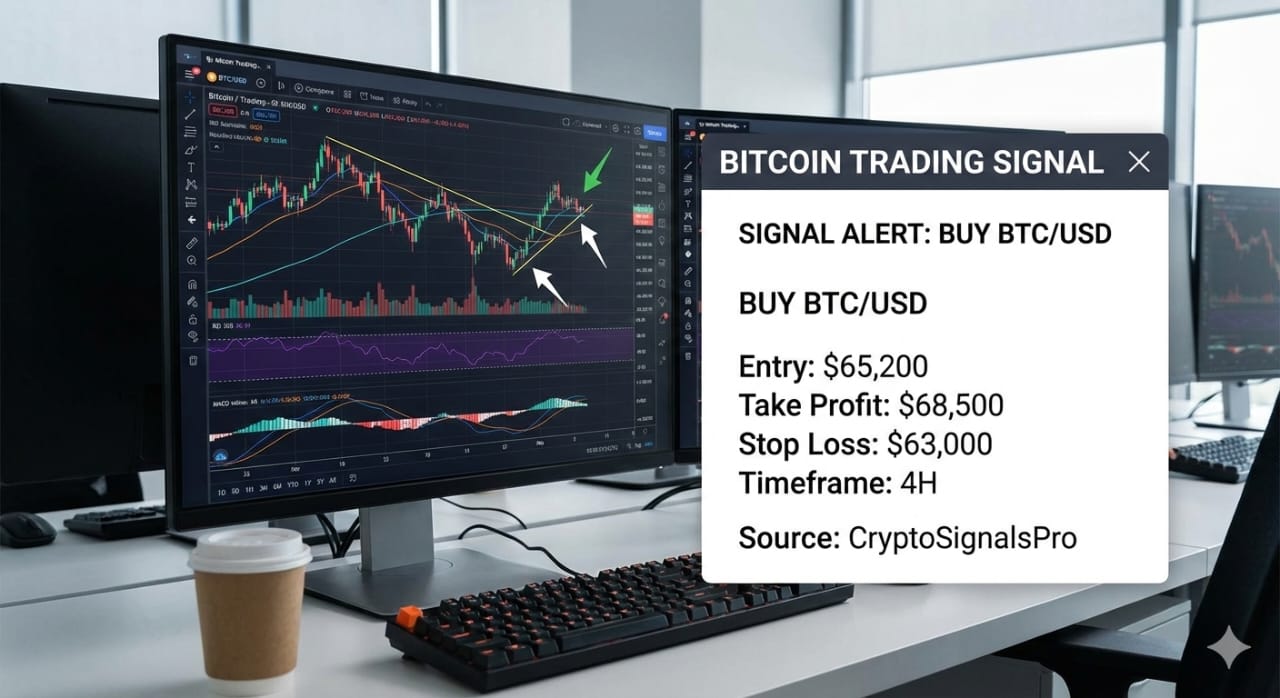
Introduction: What Are Bitcoin Trading Signals?
Bitcoin Trading Signals are actionable trade alerts that tell traders when to buy or sell Bitcoin based on market analysis and trend data. These signals are generated by experienced analysts, algorithms, or AI systems that interpret price movements, technical indicators, and market sentiment to provide potential entry and exit points for trades. (DowMarkets)
By using Bitcoin trading signals, traders can reduce https://traficjet.com/guesswork and make faster decisions — especially in fast‑moving markets like cryptocurrency. In this guide, we’ll cover top strategies, tools, risks, and optimization techniques that every trader should know in 2025.
1. How Bitcoin Trading Signals Work
Trading signals are usually made up of specific elements including:
✅ Action — buy or sell recommendation
✅ Asset — e.g., Bitcoin (BTC)
✅ Entry price — where to open the trade
✅ Stop‑Loss — limit to minimize losses
✅ Take‑Profit — target price to close with gain (DowMarkets)
These signals can be provided manually by analysts or generated automatically using AI, machine learning, and statistical price models. They help traders identify opportunities without needing constant market watching. (fameex.com)
2. Types of Bitcoin Trading Signals
There are several types of Bitcoin Trading Signals — each with its own use case:
a. Technical Signal Indicators
These are based on chart patterns and mathematical calculations.
📊 Moving Averages (MA) — Detect trend direction
📊 RSI (Relative Strength Index) — Indicates oversold/overbought markets
📊 MACD (Moving Average Convergence/Divergence) — Shows trend momentum and crossovers (Investopedia)
Technical signals are the backbone of many trading systems because they are objective and based on price actions.
3. Popular Signal Tools & Indicators
a. Moving Averages
Moving averages smooth out price data and help identify trend changes. A crossover strategy using short‑term MA crossing above long‑term MA is interpreted as a buy signal. (AltSignals.io)
b. RSI (Relative Strength Index)
The RSI shows momentum and highlights when Bitcoin may be undervalued or overbought. A reading below 30 often signals a buy zone, while above 70 may signal overbought. (AltSignals.io)
c. MACD Crossovers
MACD is a trusted trend indicator used to catch continued moves. A bullish signal occurs when the MACD line crosses above the signal line. (Investopedia)
d. Fibonacci Retracement Levels
These are used for identifying pullback levels that may act as support or resistance points where Bitcoin Trading Signals are triggered.
4. How AI & Machine Learning Improve Bitcoin Signals
Recent advancements in trading signal generation combine algorithms with big data analysis. AI systems use historical price data, social sentiment, order book behavior, and volatility metrics to offer smarter predictions. (fameex.com)
High‑profile research shows hybrid models combining LSTM (Long Short‑Term Memory networks) with other machine learning techniques can improve predictive signals for BTC price movement. (arXiv)
5. Fundamental Signals That Affect BTC Price
Not all signals are technical — Bitcoin Trading Signals can also be influenced by real‑world events:
📰 Regulatory news
💼 Institutional investment announcements
📊 ETF approvals or rejections
💻 Network upgrades and adoption trends (AltSignals.io)
Fundamental signals are crucial for long‑term trend predictions rather than short‑term price swings.
6. How to Interpret & Use Bitcoin Trading Signals
Using trading signals effectively requires process and discipline:
Step 1: Confirm the Signal
Check multiple indicators before executing trades. A combination of MACD + RSI + MA gives stronger confirmations.
Step 2: Set Risk Controls
Always use Stop‑Loss and Take‑Profit to protect capital and automate better trade exits.
Step 3: Define Your Strategy
Different traders need different signals:
🔹 Scalpers — rely on quick entries and exits
🔹 Swing Traders — depend on swing highs and lows
🔹 Position Traders — focus on long‑term macro signals
Step 4: Back‑Test Your Signals
Always test any new signals against historical data before real funds. This helps validate their reliability.
7. Where to Find Bitcoin Trading Signals
There are several sources where quality Bitcoin trading signals can be found:
🔗 Professional Signals Providers – subscription‑based platforms sending real‑time alerts
🔗 Automated Bots – algorithm‑based systems analyzing markets 24/7
🔗 Trading Communities – groups on Telegram, Discord, or apps sharing signals (choose reliable providers only) (DowMarkets)
Always verify the provider’s history and win‑rate before acting on any signal.
8. Advantages of Using Bitcoin Trading Signals
Using signals comes with several advantages:
✅ Faster decisions in volatile markets
✅ Reduces emotion‑based errors
✅ Supports both beginners and pros
✅ Potential to spot opportunities you might miss manually (fameex.com)
9. Risks and Limitations of Signals
While helpful, Bitcoin trading signals aren’t foolproof:
⚠️ No signal guarantees profit
⚠️ Wrong signals can lead to losses
⚠️ Scammers selling fake signals exist — always beware! (Reddit)
Signals should be one part of a broader strategy — always combine with personal analysis and risk management.
10. Common Mistakes Traders Make With Signals
Here are common pitfalls to avoid when using Bitcoin Trading Signals:
❌ Following every signal without analysis
❌ Ignoring stop‑loss and take‑profit
❌ Relying on unknown signal groups
❌ Trading without a plan
❌ Jumping into signals without back‑testing
Successful traders avoid impulsive decisions by using signals only when they match their strategy.
11. Practical Bitcoin Trading Signal Example
Let’s break down an example signal:
📩 Signal: Buy BTC
📅 Time: 15:00 UTC
💲 Entry: $58,500
📉 Stop‑Loss: $57,200
📈 Take‑Profit: $62,000
When this signal is confirmed by MACD crossover and RSI below 50, it may indicate a strong buy setup — always double‑confirm before entering.
12. Summary: Maximizing Your Bitcoin Trading Success
Bitcoin Trading Signals can be powerful tools for 2025 — but only if used wisely. Combine signal alerts with technical indicators, fundamental insights, and disciplined risk management to improve your trading strategy.
If you’re serious about trading, consider building your own signal confirmation checklist and always verify sources before making trades.
External Resources & Follow Links
👉 Learn More About Trading Signals: How cryptocurrency signals work and how to use them for trading — external reference to deep dive into signal mechanics. (fameex.com)
👉 Technical Indicators Explained: MACD and other key trading metrics — essential reading for mastering signals. (Investopedia)